|
Like the surrounding cultures, Israelite culture included refined elements such as the visual and performing arts. Like other aspects of daily life, these were also influenced to some extent by the surrounding cultures. Unfortunately, as far as the visual arts are concerned, little has been preserved due to the nature of the materials used. As for ancient music and dance, the situation is much worse, as all that has survived are limited verbal descriptions, a few artistic representations and some physical remains of musical instruments. The bulk of our knowledge therefore depends mainly on the interpretation of this evidence and on assumptions based on ethnographic studies of present-day societies and comparisons with neighboring ancient cultures in Egypt and Mesopotamia.
- Performing Arts: Music and Dance
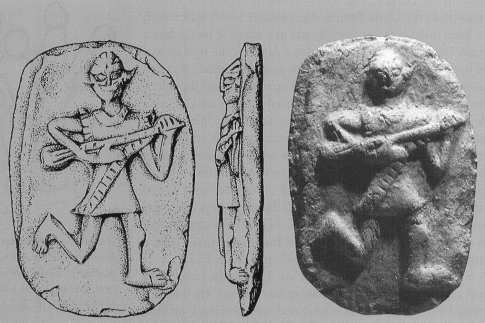 Fig. 5.1: Dancer at Tel Dan (around the 14th or 13th century BC)
The many biblical references to music and dance show that they were an integral part of Israelite life. As in modern times, music in biblical times was both vocal and instrumental, and part of a long tradition in the ancient Near East. From written documents and artistic representations, it appears that dance was most often accompanied by music.
The Bible attributes the invention of instrumental music to Jubal, "ancestor of those who play the lyre [kinnôr] and lute [ʿûḡāb]" (Gen 4: 21). Music was played both privately and publicly, on both secular and cultic occasions. Similarly, dance was practiced on various occasions, as wall paintings and stone reliefs testify. Many public musical performances were performed by professionals, as suggested by the names of guilds mentioned in the Psalms and other biblical references. The names of the guilds' eponymous founders - Asaph, Heman and Jeduthun - first appear in the description of David's preparations for building the temple (1 Chr 25: 1-7), then in the description of the inauguration of Solomon's temple (2 Chr 5: 12) and later in Josiah's Passover celebration (2 Chr 35: 15). The professional status of singers and dancers must have been enhanced during the monarchy. The list of booty taken from Hezekiah by Sennacherib illustrates this, since it includes "musicians and musicians' wives".
- Biblical Music and Biblical Instruments
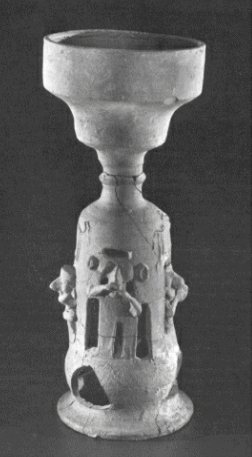 Fig. 5.2: Musician stand in Ashdod with figures of musicians. Courtesy Israel Antiquities Authority
Several musical instruments are mentioned in the Hebrew Bible. A reference containing the names of five instruments, all in Aramaic, appears in the Book of Daniel, in a description of a worship event: "When you hear the sound of the horn [qarnā'], pipe [mašrôqîtā'], zither [qatros], triangle [sabkā'], dulcimer [pĕsantĕrîn], a full concert of music [sûmpônyâ], [...] bow down and worship the golden statue that King Nebuchadnezzar has set up" (Dan 3:5; also 7:10, 15). Although this description is included in one of the later books of the Bible, it does not differ from what is known from earlier sources. A clay representation from Palestine of a musical group appears on the Ashdod musician's stand (see fig. 5.2). This Philistine fenestrated incense stand shows four individuals each using a different musical instrument. The instruments featured on the stand and in the references to the book of Daniel represent some of the groups to which the biblical instruments belonged, including percussion, membrane, wind and string instruments.
- Percussion Instruments
Percussion instruments are made of materials that reverberate when shaken or struck. This group includes instruments such as rattles (menaʿănʿîm), small and large cymbals (mĕṣiltayim), sistrums (ṣelṣelîm or šālîš) and bells (paʿămôn). A variety of these instruments, including cymbals, sistres, bells, rattles and clappers, have been discovered in several archaeological excavations. In Palestine, a sistrum was discovered at Tel Miqne-Ekron and a pair of bronze cymbals dating from around 1200-1000 BC at Megiddo. Some rattles from ancient Israel were made of clay and contained one or more pellets that made a noise when shaken.
- Membrane Instruments
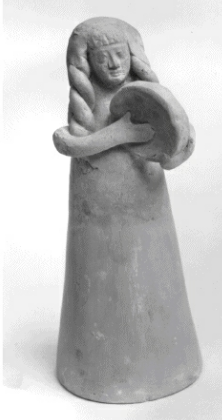 Fig. 5.3: Female tambourine player. Courtesy Israel Antiquities Authority
Membrane instruments produce sound by striking a membrane (often skin) stretched over a frame, such as a drum or tambourine (tôp). The nature of these instruments does not lend itself to good preservation. In Palestine, clay figurines of a female tambourine player showing how the instrument was used have been found at Taanach and Shiqmona (see fig. 5.3).
- Wind instruments
Wind instruments produce sound through the passage of air in, through or around them. This category includes (a) the double (v-shaped) pipe, single pipe (ḥālîl) or lamentation-pipe (nĕḥilôt); and (b) trumpet (ḥaṣōṣĕrâ) or horn (šôpār, qeren, and yôbēl). Archaeological discoveries and written evidence indicate that different materials, such as bone, wood, reed and silver, were used to make different types of pipes. The tomb of Tutankhamun yielded two copper or bronze trumpets covered in gold. Other excavations have uncovered flutes with open ends and double-reed pipes such as clarinets and oboes. Wind instruments were played both standing and seated. A bronze figurine from Byblos, dating from the second millennium BC, illustrates the seated position of a flute player. The musician's music stand from Ashdod, as well as paintings from Egypt and stone reliefs from Mesopotamia, illustrate the standing position.
- String Instruments
Stringed instruments produce sound by plucking or bowing strings stretched over a resonance box. They include lyre (kinnôr), large kinnôr (nēbel) and lute. A recent study of the geographical and temporal distribution of the term kinnôr and its equivalents suggest that the biblical references are to an oriental-type lyre (with a flat, thin base) of four to eight strings, which generally required a plectrum. A representation of such a lyre, probably Canaanite, comes from stratum VIIA at Megiddo. The term nēbel refers to the thick lyre with ten or thirteen strings, which did not require a plectrum. A clay figurine from Ashdod depicts a musician playing this lyre-like instrument. A bronze figurine from Beth-shean dating from the 12th century BC, depicting a standing woman wearing a crown-shaped headdress and playing a long-necked lute, illustrates lute playing. A similar pose can be seen in a tomb painting from the 18th dynasty, depicting a lute player, a harp player and possibly singers and/or dancers.
- Musical Notes
What did biblical music sound like? Although we have a vague idea of how Israelite music must have sounded, there is currently no way of recreating it. However, some musical terms, found mainly in the Psalms, have survived and may lend themselves to musical reconstruction in the future. Some psalms contain instructions for the music leader (mĕnaṣṣēaḥ), definition of the composition (mizmôr [melody, psalm], maśkîl [poem, song], tĕbillâ, tĕpillâ and šîr), musical instructions and references to the performers' guild. All these elements make us realize that music was a well-developed performing art.
- Musical Performance
Music was played for many different reasons and on many different occasions. Performances took place privately or publicly, for religious or secular reasons. They were vocal, instrumental or both, and were performed by professionals or laymen. They often accompanied dances (Job 21:11-12), whether organized or spontaneous.
- Private Performance
These performances took place when people were busy with mundane, everyday tasks, both indoors and out. At home, mothers sang to calm their children or while performing routine tasks such as grinding flour, preparing food and weaving. Most musical performances that could be described as private took place during outdoor activities, such as herding cattle, working in the fields and gardens, or processing agricultural produce in the wine and olive presses (treading grapes, Jer 25:30; 48:32-33) and on the threshing floor. Other moments of singing occurred during monotonous tasks such as digging a well (Num 21:16-18) or shearing sheep (2 Sam 14:28).
When a person was in a bad mood, he could relieve himself by asking someone to play a musical instrument such as the lyre, as in the case of David playing for Saul (1 Sam 16:16-23). Music was played and sung at drinking parties (Am 6:4-5) and at open-air dances (Song 7:1) in the vineyards (Jdg 21:19-21).
Music and song were practiced privately during a limited number of religious performances, such as worship in the domestic sanctuary, at funerals and during mourning. Praise was also sometimes a private affair, as in Hannah's song after Samuel's birth (1 Sam 2:1-10).
- Public Performance
Public musical performances were most often organized and performed by professionals, although they were sometimes spontaneous outbursts from non-professionals. Professional musicians performing in public are known to have existed throughout the ancient Near East, for example in Mesopotamia. Their activities are well documented and known thanks to cuneiform tablets. Egyptian tomb paintings illustrate the variety of instruments played by professional court musicians and the activities of professional dancers. The musician's stand from Ashdod represents elements of Philistine worship that involved public performance. This was not a public performance different from that of the Israelites, for the stand depicts cult functionaries like those mentioned in 2 Chr 5:12-13, which included singing Levites and musicians belonging to professional guilds. The scenes depicted on the stand also recall what is described in 1 Sam 10:5, when Saul encounters "a company of prophets coming down from the sanctuary, led by a nēbel [large kinnôr], a tôp [drum], a ḥālîl [fife] and a kinnôr [lyre], and filled with prophetic rapture".
- Secular Occurrences
At the forefront of secular musical performances are events linked to military activities, which provide an opportunity to use music in a variety of settings. Some wind instruments, in particular the šôpār, were used for calls and signals (Jdg 3: 27; 6: 34). The ram's horn was also used to stun the enemy (Josh 6:3-16; Jdg 7:15-21). Once the battle was over, music (often accompanied by dancing) was used to celebrate victory, as after the crossing of the Reed Sea, Deborah and Barak's victory over Sisera, and other occasions (Ex 15:1-18,20-21; Num 21:27-30; Jdg 5; 11:34; 1 Sam 18:6-7; 2 Sam 22). As the outcome was not always favorable, music also accompanied the lamentations of fallen heroes, as after the fall of Saul and Jonathan (2 Sam 1: 17-27). Some of the songs composed to celebrate military victories found their way into collections such as the "Book of Jashar" and the "Book of the Wars of YHWH", both of which have now disappeared.
With the development of the monarchy, the coronation of the king became one of the major events celebrated by music. At first, as in the cases of Absalom and Solomon, the šôpār is used to announce the event (2 Sam 15:10; 1 Kings 1:34, 39, 41). The ensuing feast is marked by music played on pipes (1 Kings 1:40). Metal trumpets were more musically versatile than the ram's horn and, in addition to their use for signaling, were also used in celebrations (2 Kings 11: 14). Several of the psalms are considered enthronement psalms (Ps 2; 20; 68; 72; 89; 101; 110; 144) and were probably sung as part of the coronation celebration.
There's no doubt that musicians were part of the king's entourage (2 Sam 19:36). On various occasions, they probably entertained the king, his courtiers and honored guests.
Not all occasions were joyous. Some public performances included mourning for leaders (2 Sam 3:32-34) and lamentations (Jdg 11:40).
- Religious Occurrences
The numerous biblical references to music, musicians, dances and dancers engaged in worship activities indicate that these artistic elements were well integrated into Israelite religious life. Dances associated with worship were either organized by the authorities or spontaneous as a result of religious fervor. Early dance and music traditions are linked to the dance around the golden calf (Ex 32:19), which was a spontaneous event. This type of spontaneous dance is also presented in the story of David bringing the ark to Jerusalem (2 Sam 6:5, 14-15). Another type of cultic dance intended to influence the outcome of certain events is reflected in the dance for Baal (1 Kings 18:26-28), an act that was accompanied by the use of sharp instruments such as swords and spears, to the extent that the dancers would injure each other to obtain a divine response. These dances are still practiced in some Middle Eastern communities.
Music was used to create an atmosphere conducive to certain worship practices, particularly prophecy. The meeting between Saul and the group of prophets is a case in point (1 Sam 10:5). On hearing the music, Saul was seized with "prophetic rapture" and began to act like the other prophets. The instruments played by the group were the most common: nēbel [large lyre] and tôp [drum], ḥālîl [fife] and kinnôr [lyre]. Another example of prophecy under the influence of music is that of Elisha (2 Kings 3:15), who asked a minstrel to come and play: "While the minstrel was playing, the power of YHWH came upon Elisha."
With the establishment of the temple in Jerusalem, the performance of music at certain events became institutionalized. Singing and playing instruments became part of the ritual (Am 5:23). Tradition has it that David appointed the Levites to the temple as professional musicians and created guilds of musicians (1 Chr 6:31; 15:16-24; 25:1), who continued to perform in Josiah's time (2 Chr 35:15) and right up to the fall of the temple. Their descendants were among those repatriated from the Babylonian exile (Ezra 2:41, 65), and they took part in the celebration of the inauguration of the temple: "The priests, dressed in their robes, took their places with their trumpets, and the Levites, sons of Asaph, with their cymbals, to praise YHWH according to the prescriptions of King David of Israel" (Ezd 3:10).
Pilgrimages to shrines were part of organized religion. Before the time of the monarchy, pilgrimages were organized to local shrines (1 Sam 1:3, 21). With the centralization of worship in Jerusalem, pilgrims went there and sang along the way (Songs of the Ascent, Ps 120-134).
- Visual Arts
The ancient Near East had a rich tradition of visual arts that included drawing and painting, glyptics and the plastic arts, ivory carving, metal and glass shaping, and works in wood, clay and other materials. Very little of what has been discovered at sites identified as Israelite can be called authentic Israelite art, but this doesn't mean that Israelites weren't exposed to art objects. With the exception of burnishing, Israelite pottery was simple, but Israel's neighbors produced exquisite pottery. In Iron Age I (1200 to 930 BC), Philistine pottery was distinguished by its decorations, and in Iron Age II (930 to 539 BC), Cypro-Phoenician pottery was all the rage. Throughout the Israelite period, art objects were for the most part the product of Phoenician craftsmen or were produced under Phoenician influence. Moreover, part of the inspiration of Phoenician artists and craftsmen, as evidenced by the motifs and techniques they used, came from neighboring cultures, mainly Egypt. These include human figures with Egyptian elements such as gestures, but with narrower shoulders and dressed in local clothing.
- Ivory
Large animal statues are well known in Late Bronze Age Palestine (c. 1550-1200 BC, e.g. at Hazor and Beth-shean), but none are known from the Iron Age. Similarly, large human statues are virtually absent, but smaller figurines and plaques are found at many Iron Age sites. The material most commonly used to make these objects was ivory, and ivory carving became the hallmark of Phoenician art. Ivory was used to make luxury items, including three-dimensional objects such as figurines, cosmetic accessories, spindles, pendants and knife handles, as well as inlaid furniture such as chairs (1 Kings 10: 18 = 2 Chr 9: 17) or beds (Am 6: 4). A famous collection of ivories was discovered during excavations in Samaria, and the pieces were probably used in furniture kept in the palace of the kings of Israel. A reference to this place is made in 1 Kings 22:39, where it is said that Ahab built "a house (palace) of ivory". According to Am 3:15, there were several ivory palaces (see also Ps 45:9). The possession of ivory objects by the kings of Israel and Judah is attested by lists of Assyrian tribute and booty. Ivory objects were used for cultic purposes. Some of the common people also possessed ivory objects such as combs, as shown by archaeological finds in domestic structures.
Sources of ivory were elephant tusks and hippopotamus teeth. When ivory was not available, it was replaced by large bones.
- Clay
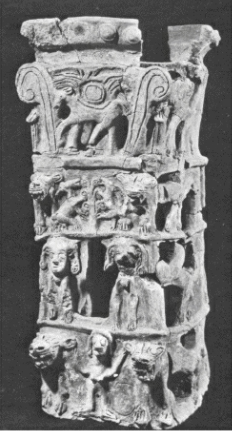 Fig. 5.4: Taanach cult stand. Courtesy Israel Antiquities Authority
Clay was the most widespread material for plastic art due to its availability and ease of handling. A unique object from the 10th century BC is the Taanach clay worship stand, a product of the Israelite-dominated region. This rectangular stand features four tiers with hand-fashioned scenes. Some scholars suggest that the lower and upper tiers represent Astarte, while the upper and lower tiers are dedicated to YHWH. The lower tier features a female figure flanked on either side by a lion. The second tier features a void in the center, flanked by a cherub (sphinx) on either side. In the middle of the third level is a tree of life flanked on either side by a horned ruminant (probably goats), and the upper level has a horse with a winged sun disk at its center. The scene on the upper level could be related to other clay representations of horses (Fig. 5.4).
Humanoid and zoomorphic figurines were part of the Israelite artistic inventory. Metal figurines were very rare during the Israelite period. An example from the early Iron Age is the bronze bull from the "site of the bull" in the mountains of Samaria. However, clay became a common material for the production of figurines, particularly in Iron Age II. The most common figurines found on Israelite sites belong to two groups: columnar figurines (see fig. 2.7) and horses with or without riders. Pillar figurines, sometimes called Astarte figurines, are so named because their hand-made body resembles a pillar with a flat base to stand on. Some figurines have a body made on a potter's wheel. Pillar figurines fall into two groups: those whose heads with curly hairstyles have been made in a mold and then attached to the body, and those whose heads have been made by pinching the top of the pillar to produce a bird-like face. Both series of figurines feature an exaggerated bust supported by the figurine's hands. This feature has led researchers to believe that the figurines, whether representing Astarte or not, were those of a fertility goddess. The numerous biblical references to the worship of Astarte by the Israelites, whether in the temple or at home, lend credence to the idea that these figurines were representations of the goddess Astarte, and that they were used in domestic sanctuaries. The cult of Astarte as the wife of YHWH is confirmed by inscriptions found at Kuntillet Ajrud, on the border between Sinai and the Negev, and at Khirbet el-Qom, in the Hebron region (see fig. 5.5).
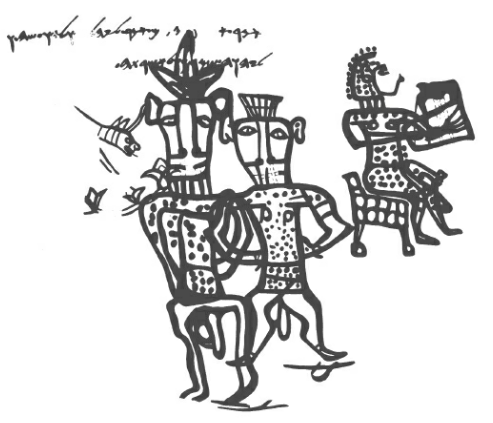 Fig. 5.5: The 'Yhwh and his Asherah' inscription at Kuntillet Ajrud. By permission of Dr Z. Meshel, Tel Aviv University, excavator of the site.
Horse figurines are another type of figurine commonly found on Israelite sites. Some of these figurines still have or had a rider, and others feature a round disc-shaped object on the top of the forehead, between the ears. It has been suggested that the "disk" was a representation of the solar disk, and that these horses were linked to the cult mentioned in 2 Kings 23:11: "He [Josiah] removed the horses that the kings of Judah had set up in honor of the sun at the entrance to the house of YHWH... and he burned the chariots of the sun".
Another clay object associated with worship, the remains of which have been found at Israelite sites, is the "ashdoda" or couch figurine. A complete example is known from the Philistine city of Ashdod, from which it takes its name (see example at the Jerusalem Museum). It depicts a long-necked woman with a small head, whose body, devoid of arms, is transformed at hip level into a couch or table. The number of these objects is quite limited, and most of the known remains concern the lower part, the divan.
- Glyptic Art
Stone carving was relatively common in the Iron Age II (930 to 539 BC). Israelite craftsmen were highly experienced in producing stone objects such as scarab seals, cosmetic palettes and stone weights. Although the latter cannot be considered works of art, they testify to the skill of Israelite stone craftsmen.
Most Israelite seals were made of precious or semi-precious stones, were shaped like a scarab beetle and could be worn on a cord around the neck or set in a ring. Seals were used to authenticate and verify documents (Jer 32:10-14,44) or for identification (Gen 38:18). Most seals bore the owner's name in the upper register, separated by two or three straight lines from his father's name below. Sometimes, a third register was added with a title or a description of the owner's profession, but sometimes this designation replaced the patronymic name. Sometimes, one of the registers featured an illustration of an animate (rooster, lion, etc.) or inanimate object (lyre, ship, etc.). The whole was surrounded by an oval frame of one to three lines. Most of the known seals belonged to wealthy individuals, scribes, court officials and members of the royal family.
Many lost seals are known thanks to imprints left in clay, either on jar handles or on bullae. The latter is a piece of clay applied to the string that seals a document, usually a papyrus. An important series of seal impressions, known as lmlk ("[belonging] to the king"), is the result of a set of royal seals. The seals were printed in the damp clay of jar handles, perhaps to verify something related to the jar or its contents. These seals bore the term lmlk inscribed in the top register and the name of one city out of four (Hebron, Ziph, Socoh, mmšt) in the bottom, with a representation of a flying scroll or four-winged beetle in the middle. It has been suggested that the products contained in the sealed jars were linked to Hezekiah's reforms and his revolt against Assyria in 701 BC.
Cosmetic palettes are another series of objects carved from stone. These circular, concave objects, with a round depression in the center, were made mainly of limestone. Most are decorated with simple motifs arranged around the depression. Among the decorations are a series of circles with a dot in the middle, circular grooves and hatch marks. These palettes were probably used by women to mix make-up ingredients.
- Mixed Media
Jewelry is another group of objects in which art finds expression. While we don't know whether these objects were made by Israelite craftsmen or imported, it is clear from archaeological finds and biblical references that the Israelites adorned themselves with a variety of ornaments: rings, necklaces, ear and nose rings, bracelets and anklets, and other objects, all made of precious and semi-precious metals, stones, bones, shells, glass and similar materials. Most of the jewelry found in archaeological excavations comes from burials where the objects were buried with the deceased.
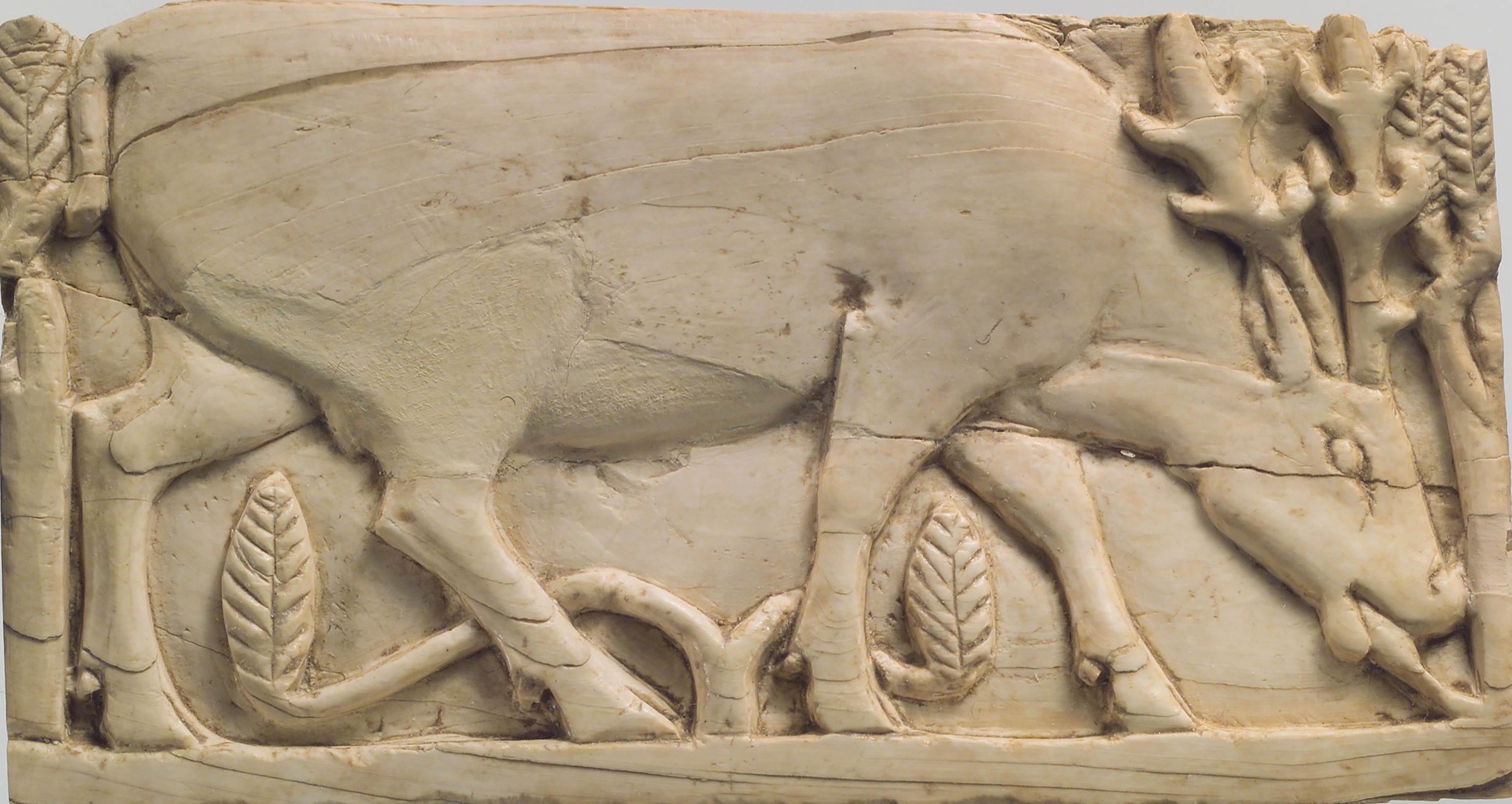 Fig. 5.6: Arslan Tash: cow licking the tail of a suckling calf. Image from the Metropolitan Museum of New York.
Drawing and painting are another field of artistic expression, carried out on a variety of materials, notably stone and pottery. Most of the known drawings were made spontaneously and can be considered graffiti, created with ink or by scratching the image onto the solid material. It is quite possible that, as in neighboring Egyptian culture, this artistic activity was also carried out on perishable materials such as wood, leather, papyrus or parchment. However, due to the nature of these materials and the climate, which did not allow them to be preserved, we lack evidence. An example of this artistic effort is well attested by the ink drawings on clay jars at the Kuntillet Ajrud site. (see fig. 5. 5). In addition to a few Hebrew inscriptions, several jars bear images of gods, people, animals and plants. Interestingly, one jar features the image of the Egyptian god Bes, with a second deity on either side. On the other side, there's a drawing of a woman playing the lyre. A lion, other animals and a tree of life with an ibex on each side are also depicted. Another drawing on the jar, of a cow licking the tail of a suckling calf, recalls the carved ivories of Nimrud and Arslan Tash. Among the drawings on a second jar, one depicts a row of five people standing, their arms raised in a gesture of prayer. Although the drawing was executed by local artists, it is clear that they were strongly influenced by the Syro-Phoenician artistic tradition. As the inscriptions mention the name of YHWH, we can assume that the artists were also worshippers of YHWH. In addition to the decorated jars, fragments of painted plaster suggest that the walls of the building were decorated with frescoes containing geometric and floral motifs. The frescoes, found in association with other artistic motifs, suggest that this art form was not confined to this isolated site.
- Bibliography
- Braun, Joachim. Music in Ancient Israel/Palestine: Archaeological, Written, and Comparative Sources. David Noel Freedman, ed. The Bible in Its World. Grand Rapids: Eerdmans, 2002.
- Braun, Joachim. "Music, Musical Instruments". Pages 927-30 in Eerdmans Dictionary of the Bible. David Noel Freedman, ed. Grand Rapids: Eerdmans, 2000.
- Frankfort, Henri. The Art and Architecture of the Ancient Orient. 4th ed. New Haven: Yale University Press, 1970.
- Gunter, Ann C. "Ancient Near Eastern Art." Pages 402-8 in vol. 1 of Anchor Bible Dictionary. David Noel Freedman, ed. 6 vols. New York: Doubleday, 1992.
|
Next chapter: Writing - Private and Official
List of all chapters

(click on map to enlarge)
|