|
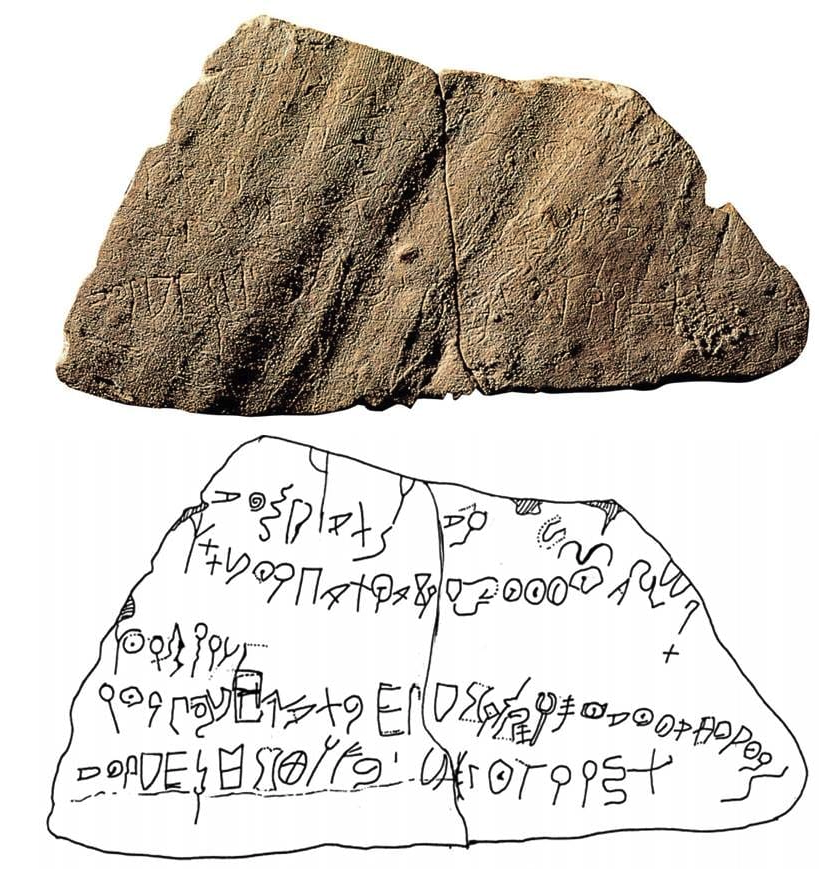 Fig. 6.1: Izbet Sartah Abecedary at the Israel Museum in Jerusalem.
Did the Israelites know how to read and write, and if so, to what extent? It's hard to say just how common reading and writing were among the Israelites. Moreover, it is difficult to assess the evolution of literacy levels over the long Israelite period. Consequently, what follows is an indication of what was possible, but no definitive answer is given. Archaeological and written evidence suggests that, like Ammonite, Edomite and Moabite, Hebrew, which used an alphabetic script, was a dialect of West Semitic (Canaanite). Hebrew was written using the "Phoenician" script, which consisted of twenty-two letters and could be used on many types of material, both perishable and non-perishable. The scarcity of written documents from the Israelite period is mainly due to the fact that most of them were written on perishable materials such as parchment, papyrus and wood. What is available, apart from the Hebrew Bible in its present form, was preserved on stone, precious metals and in various forms of clay.
Writing has been used for many purposes; consequently, evidence can be classified into two groups: private writings and official writings. But who were the real writers? Archaeological evidence suggests that private individuals learned the art of writing and used it for their own purposes. Two of the oldest Hebrew documents, the Izbet Sartah abecedary (c. 11th century BC) and the Gezer calendar (c. 925 BC), have been identified by several scholars as writing exercises. These two documents were engraved on a shard of pottery and a fragment of flat limestone respectively, and are the product of untrained hands. Both documents show that a certain amount of writing was practised by the Israelites. The case of Izbet Sartah is very interesting because it concerns a small hamlet where one would not expect any literacy. The existence of the alphabet book indicates that at least two people, the pupil and the teacher, were able to write in this rural village.
Biblical and archaeological evidence points to the existence of a well-trained class of people known as scribes. Early in Israel's history, they were the official reporters of events (Jdg 5:14), and with the development of the monarchy, an official scribe was appointed as a member of the bureaucracy (2 Sam 8:17). Scribes took part in temple transactions (Jer 36:10) and helped certain prophets record their words (Jer 36:18, 32). Scribes were employed by officials to handle official correspondence and provided services to people who needed help in this area. Exactly how they were trained is not known. By comparison with neighboring cultures, we can assume that scribes formed an organized group and were trained in centers such as temples and royal palaces by copying certain works.
Written evidence can be inscribed on pottery shards, incised into jars or jar fragments before or after firing, stamped on jars and jar handles, and incised into rock or metal. Their use may be private or public, or both.
- Private
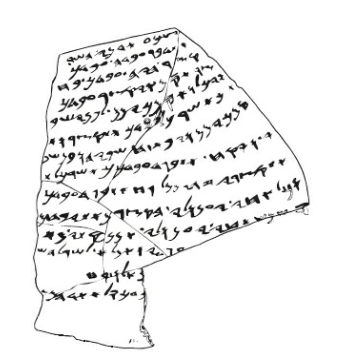 Fig. 6.2: Drawing of a judicial petition from Meṣad Hashavyahu. Courtesy Andrew G. Vaughn.
Inscribed objects will be classified here as private if they have been produced for the benefit of an individual with no expectation of compensation from the public sector. This classification makes it possible to identify several objects, including amulets, requests for blessings and other inscriptions of a personal nature.
Some of these documents have already been mentioned, including the Gezer calendar and the abecedaries of Izbet Sartah and Kuntillet Ajrud. To these should be added the petitions of Kuntillet Ajrud and Khirbet el-Qom, which implore "YHWH and his Asherah" to bless certain individuals. Silver amulets from the Ketef Hinnom burial caves in Jerusalem, dated to the early 6th century BC, belong to the same group. One of them contains a text very close to the priestly blessing of Num 6:24-26, and reads as follows: "May YHWH bless you and watch over you! May YHWH make his face shine upon you and grant you peace!" Another burial inscription from Jerusalem's Silwan cemetery is known as the Royal Steward's Inscription. It reads as follows: "Here is [the tomb of...] Yahu, the royal steward. There is neither silver nor gold, only [his bones] and the bones of his handmaiden. Cursed be he who opens it". From the reference to Isa 22:15-16, it has been suggested that this was the tomb of Shebna, who was "steward of the house" under the government of Hezekiah (8th or 7th c. BC). The Silwan cemetery has yielded several other burial inscriptions, all of which suggest that the common people knew how to read, since these inscriptions were intended for them.
Pottery, whole or fragmentary, called ostraca (sg. ostracon), was a fairly common writing material. A very famous ostracon is the letter from Meṣad (Fortress) Hashavyahu found at Yavneh-Yam south of Tel Aviv and dated to the seventh century BC (fig. 6.1). Although this letter is addressed to the Governor (baśśar), which may define it as an official document, it contains the plea of an individual attempting to recover his personal property (coat) confiscated by another official named Hashavyahu for failing to complete the harvest of the daily quota of grain assigned to him. The document bears neither the name of the addressee nor that of the complainant, and it has been suggested that this is because the complaint was written at the entrance to the fort and the complainant was waiting by the door for the reply. Furthermore, the language of the letter suggests that it was dictated in haste, and that the complaint was probably based on the law set out in Ex 22:25-26 (see also Deut 24:12-13): "If you take your neighbor's cloak as a pledge, return it to him at sunset, for it is his only covering. It's the cloak he wraps himself in. What else will he sleep in?"
Other written traces, such as inscriptions on jars describing their contents or their owner, testify to the fact that a certain number of individuals, at the time of the divided monarchy, knew alphabetical writing.
- Official Writings
Scribes were employed for official business at the royal court, in temples and sanctuaries, and by many prophets. Being a scribe was seen as belonging to a high class. Biblical references show that some scribes were well-connected. One of the scribes' functions was to help keep official records and maintain correspondence. There are good examples of both functions. One is that of Jeremiah, who bought a plot of land and recorded the purchase in a sealed document, given to his scribe for safe keeping (Jer 32:6-15).
- Correspondence
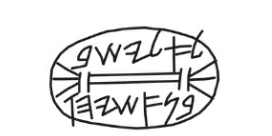 Fig. 6.3: Drawing of a seal from Arad. Courtesy Andrew G. Vaughn.
Letter-writing and record-keeping had a long tradition in the Ancient Near East. Correspondence archives have been found in Mesopotamia, Syria, Egypt and Anatolia. In ancient Israel, letters were written on both perishable (papyrus, leather) and non-perishable (shards) materials. Despite the nature of these materials, the large number of bullae found at various sites, particularly in Jerusalem, bears witness to the existence of the former. Bullae, which are small pieces of clay that sealed the knot of a thong attaching a rolled papyrus or parchment document, were marked with a seal to protect the document from being opened by an unauthorized person (see fig. 6.3). Their recovery is a sure marker of the past existence of perishable documents in the places where they were discovered. As almost all documents bear inscriptions, seal impressions, in addition to the seals themselves, are an excellent source for the study of Israelite and non-Israelite onomastics, administration, history and relationships. Although the documents were lost to fire or other destructive conditions, their earlier existence is well attested. Unfortunately, their contents cannot be recovered.
Some seals and seal impressions contain not only the names of individuals and their family lineage, but also information on the professions and social position of the seal owners. In addition to people holding positions such as servant, scribe, priest, physician, high official, we know of particular individuals who held positions as "over the house" (royal steward, 1 Kings 4: 6), "over the corvée " (2 Sam 20: 24; 1 Kings 5: 28), "governor of the city" (1 Kings 22: 26; 2 Kings 23: 8), "son of the king", and "daughter of the king". We also have seals and seal impressions bearing the names of kings Ahaz and Hezekiah.
Although no papyrus or parchment documents survive from the Israelite period, a number of ostraca have survived and are informative about certain aspects of life. Ostraca found at a site can shed light not only on life there, but also on other sites and individuals associated with it at the time of their composition. Letters written on pottery shards have been found in the fortress of Arad, east of Beer-Sheva, and at the gateway to the town of Lachish, in southern Shepherah. Arad provides us with ostraca from several periods, including a collection of some 20 ostraca dated to around 597 BC and belonging to the archives of Elyashib, probably the fort's commander. The number of ostraca in the archive is small because Elyashib kept them for a short period until they could be transcribed into the official register, which was probably kept on papyrus. The archives, which date from the last days of Arad before it fell to the Babylonians, describe daily activities such as the distribution of rations to individuals or to an entity named kittim, probably a group of Cypriot mercenaries. One of the ostraca, number 18, mentions "the house of YHWH", probably the temple of Jerusalem. It has been suggested that this was either the temple of Jerusalem or that of Arad, but by this time the temple of Arad was no longer functioning following Hezekiah's reforms.
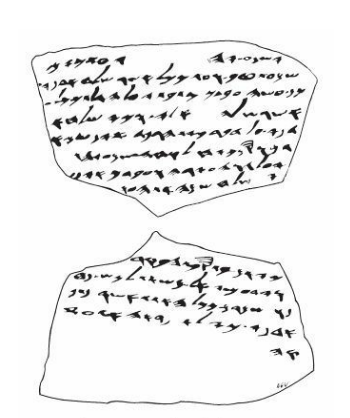 Fig. 6.4: Drawing of Lachish Letter 4. Courtesy Andrew G. Vaughn.
"May YHWH cause my [lord] to hear, this very day, tidings of good. And now, according to everything which my lord has sent, this has your servant done. I wrote on the sheet according to everything which [you] sent [t]o me. And inasmuch as my lord sent to me concerning the matter of Bet Harapid, there is no one there. And as for Semachiah, Shemaiah took him and brought him up to the city. And your servant is not sending him there any[more ---], but when morning comes round [---]. And may (my lord) be apprised that we are watching for the fire signals of Lachish according to all the signs which my lord has given, because we cannot see Azeqah"
The other group of ostraca, known as the Lakish letters, is dated to the last days of the kingdom of Judah (c. 587/586 BC). Because of their repetitive nature and the fact that they were written on shards mostly belonging to the same jar, the Lachish letters could be drafts composed before a final version on papyrus was prepared and dispatched. The ostraca were written by Hoshayah to Ya'osh and invoke the name of YHWH in the greetings and throughout the text. Letter number 4 is very interesting as it mentions the fact that the fire signals from Azeka, a neighboring site to the north, could no longer be seen (see fig. 6.4). The fire signals are mentioned in Jer 6:1, and the last days of Judah are mentioned in 34:7, when "the army of the king of Babylon attacked Jerusalem and the last cities of Judah, namely Lachish and Azekah, the only fortified cities left there". The letters from Lachish, and in particular letter no. 4, provide a physical link with the events described in Jeremiah.
- Record Keeping
One of the functions of the bureaucracy was to keep records, some of which concerned the economy in general and tax collection in particular. An example of this activity is provided by the ostraca of Samaria, a collection of tax receipts dated to the eighth century BC (probably the reign of Jeroboam II, circa 787-746 BC) discovered in one of the rooms of the royal palace of Samaria. The ostraca contain dates of receipt - the ninth year, the tenth year, the fifteenth year and even the seventeenth year, probably under the reign of a king - with the name of the recipient, the commodity (wine or oil) and the place of origin, which was either a private or a royal estate, as shown for example in ostraca 18: "The tenth year. From Hazeroth to Gaddiyau. A jar of fine oil".
Another example of registration is the jar handles stamped lmlk. These prints bear the inscription lmlk ("[belonging] to the king"), a representation of a four-winged beetle or a two-winged flying scroll, and the name of one of the following four places: Hebron, Socoh, Ziph and mmšt. It has been suggested that the latter name was a designation of Jerusalem. Archaeological excavations, notably at Lachish, have established that the jars lmlk date from the reign of King Hezekiah, and it has been suggested that they were part of Hezekiah's reforms and played a role in preparing for his revolt in 701 BC against the Assyrian king Sennacherib. How the jars were used is not entirely clear. There are three possible explanations.
- The jars contained staples such as oil and wine, and would have been used to supply the places that were supposed to take part in the revolt.
- Another proposal, based on the study of the lmlk handles and their provenience, argues against the narrow approach of using these jars for preparations just before the siege and suggests that they would have been used for a much longer period. Accordingly, Hezekiah would have begun distributing goods in these jars as soon as he stopped paying tribute to Assyria and anticipated an attack by Sennacherib.
- A third proposal is that the products were used in part to improve the economic conditions of the priests who were deposed by Hezekiah's reforms in order to secure their loyalty during the revolt. Like many jars lmlk are stamped with seals belonging to Judean officials, it is quite possible that the stamped jars and similar items were registered by the king's administration before being shipped to their final destination.
- Chronicles
Israelite culture had a wide variety of means of official documentation. Letters were written in draft form, then transcribed onto an official papyrus or parchment document which was forwarded to the addressee. Similarly, notes were taken and various lists were kept first in draft form and then transcribed into the official document kept in the archives. An important category of official documents were chronicles, "the book of memorable events, the chronicle" (Esth 6:1). Numerous parentheses in the Bible show that much of the recorded historical recollection is based on source books that were probably kept in the archives of royal courts. There are often specific references to these books. The Annals of the Kings of Judah are supposed to contain the deeds of most of the kings. These documents must have served as a reference when writing the text we read today. Reports of the existence of these annals concern Rehoboam (1 Kings 14: 29), Abijam (1 Kings 15: 7), Asa (1 Kings 15: 23), Jehoshaphat (1 Kings 22: 46), Jehoram (2 Kings 8: 23), Johoash (2 Kings 12: 20), Amaziah (2 Kings 14: 18), Azariah (2 Kings 15: 6), Jotham (2 Kings 15: 36), Ahaz (2 Kings 16: 19), Ezekiah (2 Kings 20: 20), Manasseh (2 Kings 21: 17), Amon (2 Kings 21: 25), Josiah (2 Kings 23: 28) and Jehoiakim (2 Kings 24: 5). The Bible does not mention the existence of such records for Jehoahaz, Jehoiakin and Zedekiah, probably due to the circumstances surrounding the end of their reigns.
Similar records exist for the kings of Israel. The Bible mentions that the following kings were recorded in the Annals of the Kings of Israel: Nadab (1 Kings 15: 31), Elah (1 Kings 16: 14), Omri (1 Kings 16: 27), Ahab (1 Kings 22: 39), Ahaziah (2 Kings 1: 18), Jehu (2 Kings 10: 34), Jehoahaz (2 Kings 13: 8), Johoash (2 Kings 14: 15), Jeroboam II (2 Kings 14: 28), Zechariah (2 Kings 15: 11), Shallum (2 Kings 15: 15), Menahem (2 Kings 15: 21), Pekahiah (2 Kings 15: 26) and Pekah (2 Kings 15: 31). Hosea, son of Elah, who was the last king of the northern kingdom, is not mentioned in the annals, obviously because of the destruction and extinction of the kingdom.
- Monumental Inscriptions
Ancient Israel is not known for its production of monumental inscriptions or dedications. While Israel's neighbors produced inscriptions such as the Mesha inscription (or Moabite stone), the Dan inscription and the Tel Miqneh Ekron inscription, there is only one inscription from ancient Israel that can be considered as such, the Siloam inscription, and even this inscription is different from other monument inscriptions because the place where it was found, in the tunnel of Hezekiah (or Siloam), was hidden and out of public view. The inscription reads as follows:
"[] the tunnel. And this was the story of the tunnel. While [the stonecutters were] still [striking with] the axe, each man toward his fellow, and while there were still three cubits [5 feet] to be cut [through, there was heard] the voice of a man calling to his fellow, as there was a crack in the rock, to the right [and to the left]. And on the day of (the breakthrough of) the tunnel, the stonecutters struck each toward his fellow, axe against [a]xe. And the water ran from the source to the pool for 1,200 cubits [1,750 feet]. And one hundred cubits [165 feet] was the height of the rock above the head(s) of the stonecutters."
The place where the inscription was found indicates that it was not intended to be seen by the public. The absence of the name of the king (probably Hezekiah) who ordered the project suggests that the inscription was not ordered by the king but followed the initiative of the workmen. If this is correct, we can assume that reading and writing were commonplace in the 8th century BC. This point is reinforced by the existence of the three foreign inscriptions mentioned above and by the tomb inscription "house attendant", all of which were addressed to ordinary people.
- Miscellaneous Inscriptions
It is not possible to list all the inscriptions that exist today, mainly because they are too numerous and very brief. I would, however, like to mention once again a group of objects, Judean stone weights, many of which are inscribed. These dome-shaped objects were used as weights in everyday commerce, and many of them bear an inscription at the top indicating their weight (denomination). Some weights bear the inscriptions bq', pym, nsp, or a sign similar to the Greek letter gamma (probably designating the shekel) with an Egyptian hieratic numerical symbol of 5, 10, 20, 30 or 40 next to it.
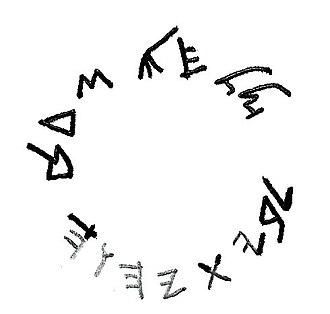 Fig. 6.5: Drawing of pomegranate inscrption. Missing letters are shown in light grey.
One very important inscription worth mentioning here is known as the ivory pomegranate inscription, as it appears on the shoulder of an ivory object in the shape of a pomegranate. The object is pierced at the base, as if it were meant to be placed on a scepter. The inscription is damaged and incomplete. The object's place of origin is unknown, but specialists assume that it was originally used in the Jerusalem temple. This hypothesis is based on the proposal to complete the inscription: qdš khnm lby[t yhw]h, "Holy to the priests, belonging to the house [of YHW]H."
- Creative Writing
Several books of the Bible are a good example of creative writing that is not necessarily rooted in history, politics, the legal system and other types of formal writing. Books in this category include philosophical reflection, wisdom literature, poetry and so on. Many of these works have survived and found their way into the Bible. However, from the biblical references, it seems that ancient Israel was very creative in its writing, although many works have unfortunately not survived. The Book of Jashar, mentioned in Jos 10:13 and 2 Sam 1:18, was a book of poetry that has not survived. Another book of poetry, now lost, is the Book of the Wars of YHWH (Num 21:14), probably devoted to the celebration of Israel's wars and victories.
Creative writing in ancient Israel proves that in Israelite times, there were people educated in writing and reading who had enough free time to devote to such creativity.
- Bibliography
- Avigad, Nahman. Bullae and Seals from a Post-Exilic Judean Archive. Qedem 4. Jerusalem: Institute of Archaeology, Hebrew University of Jerusalem, 1976.
- Avigad, Nahman. Hebrew Bullae from the Time of Jeremiah: Remnants of a Burnt Archive. Jerusalem: Israel Exploration Society, 1986.
- Avigad, Nahman, and Benjamin Sass. Corpus of West Semitic Stamp Seals. Jerusalem: Israel Academy of Sciences and Humanities; Israel Exploration Society; Institute of Archaeology, Hebrew University of Jerusalem, 1997.
- McCarter, P. Kyle, Jr. Ancient Inscriptions: Voices from the Biblical World. Washington, D.C.: Biblical Archaeology Society, 1996.
- Smelik, Klaas A.D. Writings from Ancient Israel: A Handbook of Historical and Religious Documents. Louisville: Westminster John Knox, 1991.
- Vaughn, Andrew G. Theology, History, and Archaeology in the Chronicler's Account of Hezekiah. Society of Biblical Literature Archaeology and Biblical Studies 4. Atlanta: Scholars Press, 1999.
|
Next chapter: A Day In The Life Of The Ahuzam Family
List of all chapters

(click on map to enlarge)
|